
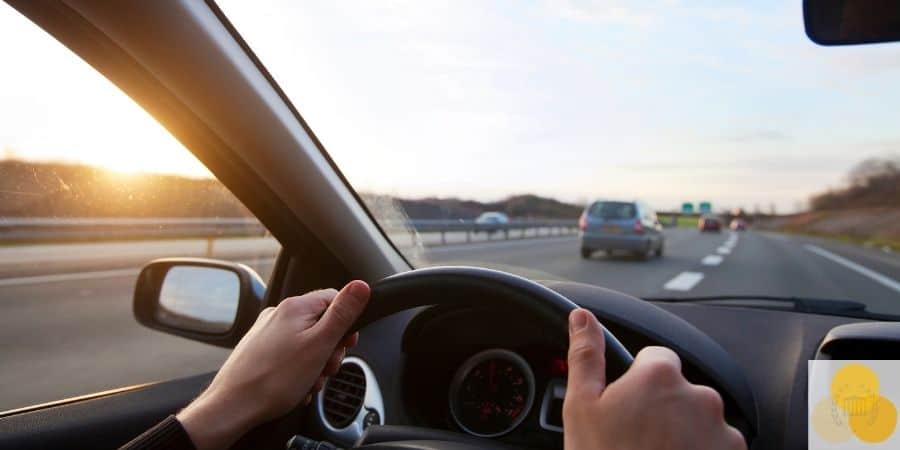
Another driver’s mistake can undo your careful driving in a second. If a close call or a crash has left you tense behind the wheel, that’s a normal reaction. Defensive driving is how you take back some control: you give yourself the time and space to react when someone else gets it wrong. Below are six tips, each backed by federal crash data or Michigan’s driver manual, followed by what careful driving means for your insurance and any injury claim. Rules specific to Michigan are labeled.
In 2024, U.S. traffic crashes killed 39,254 people and injured an estimated 2.42 million, according to the National Highway Traffic Safety Administration (NHTSA).
Already hurt by another driver? Get a free case review. Four quick questions, no cost, no obligation.
What is defensive driving?
It means driving to prevent crashes, not just to obey the rules. Two habits from the Michigan Department of State’s driver manual, What Every Driver Must Know, capture the idea: look 20 to 30 seconds down the road so you avoid last-second reactions, which the manual calls a defensive driving technique, and whenever you aren’t sure what another driver will do, let them go first.
What are 6 tips for defensive driving?
1. Leave 3 to 4 seconds of space
Michigan’s driver manual says “a 3- to 4-second following distance is required.” When the vehicle ahead passes a sign or other fixed point, count “one-thousand one, one-thousand two, one-thousand three.” If you reach the point before you finish, you’re too close. At higher speeds or in bad conditions, stretch the gap up to 6 seconds or more if needed (Michigan Department of State).
Rear-end crashes were the most common kind police reported in 2023: an estimated 1.75 million, including about 461,000 injury crashes and 2,701 fatal ones (NHTSA). If someone tailgates you, let them pass, as NHTSA and the manual both advise. See who is at fault in a rear-end crash.
2. Slow down for the conditions, not just the sign
The manual says to drive at a speed that lets you stop within the clear distance ahead, which can be slower than the posted limit. In 2024, 11,288 people died in speeding-related crashes, 29% of all traffic deaths. NHTSA counts driving too fast for conditions as speeding, and speeding was a factor for 18% of drivers in fatal crashes on dry roads but 38% on ice or frost (NHTSA). NHTSA also warns that every time your speed doubles, your stopping distance quadruples.
In bad weather, the manual adds:
- Rain: roads are slickest in the first half hour, so allow at least twice your normal following distance.
- Cold: bridges and underpasses freeze before the road does.
- Fog: use your low beams. If you can’t see at all, pull off the road, turn on your flashers and wait.
3. Put the phone away before you drive
In 2024, crashes involving a distracted driver killed 3,208 people, 437 of them in crashes where a driver was using a phone, and injured an estimated 315,167 more (NHTSA). NHTSA notes that these police-reported counts can miss distraction, for example when a driver won’t admit to texting.

Set your route and music before you start, settle and buckle in children first, and park if you must make a call (Michigan Department of State). As of September 2026, Michigan’s phone law applies even when you’re stopped at a red light (MCL 257.602b).
4. Drive sober and rested
In 2024, 11,904 people died in crashes involving a driver or motorcycle rider with a blood alcohol concentration of .08 or higher, 30% of all traffic deaths (NHTSA, which estimates alcohol levels when test results are missing). The manual says even one drink can slow your reactions, and only time sobers you up. Pick a designated driver or another ride before you start drinking.
Fatigue is harder to measure. NHTSA recorded 644 deaths in 2024 in crashes involving drowsy drivers (NHTSA), and it has noted that drowsy driving can go unreported when drivers don’t realize, or won’t admit, that they were tired (NHTSA, 2017). The manual’s advice for long trips: if you feel tired, pull off at the next exit and take a 10-minute break at least every two hours, or let someone else drive.
5. Look ahead, and look twice for people outside cars
In 2024, traffic crashes killed 7,080 pedestrians, 6,228 motorcyclists and 1,103 bicyclists and other cyclists. People outside vehicles made up 38% of all traffic deaths, up from 20% in 1996 (NHTSA). If a driver hit you on a bike, see bicycle accident claims. The manual’s advice:
- At intersections, check cross traffic, pedestrians and signals, and edge forward slowly if something blocks your view.
- Look twice for motorcycles and bicycles. Before a left turn, assume they’re closer than they look and let them pass.
- Yield to people crossing, even on a green light, and never pass a vehicle stopped for a pedestrian.
- Give bicyclists at least 3 feet when you pass, as Michigan law generally requires (MCL 257.636(2)).
6. Buckle up on every trip
Lap-and-shoulder belts reduce the risk of fatal injury to front-seat passenger car occupants by 45% and the risk of moderate-to-critical injury by 50% (NHTSA). In 2024, 48% of passenger vehicle occupants killed in crashes were unrestrained, compared with 13% of those who survived fatal crashes (NHTSA, counting people whose restraint use was known). Air bags don’t replace a belt (Michigan Department of State). See who must buckle up under Michigan’s seat belt law.
How do these tips line up with Michigan law?
Most of these habits are also legal duties. In a Michigan injury case, jurors who find that a driver broke a state traffic law may infer that the driver was negligent, then decide whether the violation caused the crash (M Civ JI 12.01). Our guide to the legal duties every driver owes explains each rule.
| Tip | The Michigan rule it reflects |
|---|---|
| 1. Following distance | Don’t follow “more closely than is reasonable and prudent” (MCL 257.643(1)). A driver who hits the back of a vehicle going the same way, or of one lawfully stopped on the road, is presumed negligent unless the evidence shows otherwise (MCL 257.402(a)) |
| 2. Speed | Drive at “a careful and prudent speed” for the conditions, slow enough to stop “within the assured, clear distance ahead” (MCL 257.627(1)) |
| 3. Phones | Don’t hold or use a phone while driving, with exceptions such as hands-free use and emergency calls (MCL 257.602b) |
| 4. Impairment | Don’t drive while intoxicated or visibly impaired by alcohol or drugs (MCL 257.625) |
| 5. Intersections | Follow the right-of-way rules, yield on a green light to pedestrians and bicyclists lawfully in the intersection or crosswalk, and pass bicyclists with at least 3 feet where practical (MCL 257.612(1)(a), 257.636(2), 257.649, 257.650) |
| 6. Seat belts | Drivers and front-seat passengers must wear a seat belt, and children under 16 must be belted or in the right car seat (MCL 257.710d, 257.710e) |
Why does your own driving matter if someone else causes a crash?
Because fault can be shared. The other driver’s insurer handles claims like yours every day, and it may argue that your speed or your phone helped cause the crash. In most states, your share of the fault reduces what you recover; some cut off recovery at 50% or 51%, and a few bar it for any fault at all (Cornell Law School’s Legal Information Institute).
A made-up example: A driver runs a red light and hits you while you’re going 10 mph over the limit. If a jury decides your speed helped cause the crash and puts 20% of the fault on you, your damages drop by 20%.
Hit by a driver who wasn't paying attention? Get a free case review. Four quick questions, no cost, no obligation.
Can defensive driving lower your car insurance?
It can help, but no habit guarantees a lower premium. Outside Michigan, ask your insurer or your state’s insurance department.
Where can Michigan drivers take a defensive driving course?
The state’s own program is the Basic Driver Improvement Course (BDIC), a refresher on basic traffic safety for drivers with a qualifying ticket:
- Who can take it: only drivers the Department of State notifies by letter. Among other limits, a ticket for a crime or from another state doesn’t qualify, and neither do drivers with a commercial license or more than 2 points on their record when ticketed.
- How it works: at least 4 hours of course time with an approved sponsor, online or in a classroom, then a written exam, all within 60 days of the letter. Sponsors can charge no more than $100 (MCL 257.320d(7)).
- What it does: the ticket still goes on your driving record, but the points don’t, and neither is reported to your insurer. You can pass the course only once (Michigan Department of State; MCL 257.320d).
Older drivers can find refresher courses and a driving self-assessment at the Department of State’s Safe Drivers Smart Options site, Michigan.gov/AgingDriver.
Hurt by another driver anyway?
Even careful drivers get hit. If it happens, get to safety, call 911 if anyone is hurt, and see a doctor within a day or two, even if you feel fine. Our checklist of 10 things to do after a car accident covers the scene, the first 72 hours and the weeks after.
Hurt and not sure where you stand? Get a free case review. Four quick questions, no cost, no obligation.
What to do next
- Start with one habit on your next drive, such as counting your following distance.
- If a Department of State letter says you’re eligible for the Basic Driver Improvement Course, enroll and finish within its 60 days if you want the benefit.
- Ask your insurer which discounts you qualify for, including any for an accident prevention course.
- If another driver hurt you, get medical care, give your auto insurer written notice within a year to protect Michigan PIP benefits (MCL 500.3145(1)), and get a free case review or compare Michigan injury lawyers. Get any fee agreement in writing.
What waiting can cost
- Your chance at the course. Miss the 60-day window and the points and the ticket go on your record and are made available to your insurer. The Department of State can’t extend it.
- Evidence. After a crash, video gets recorded over and damaged cars get repaired.
- Your PIP benefits. Without written notice or a payment within a year, you can lose the right to sue for Michigan PIP benefits (MCL 500.3145(1)).
- Your lawsuit. Most Michigan injury lawsuits must be filed within three years (MCL 600.5805(2)).
What a good outcome looks like
You arrive with room to spare, and your record stays free of the crashes and tickets that bring surcharges. If another driver still causes a crash, your medical bills are covered while you heal, any fault put on you matches what really happened, and every deadline is met. From feeling at the mercy of other drivers to knowing the habits that give you time to react, and what they mean for your insurance and any claim.
For more, see the legal duties every driver owes, what teen drivers should do after a crash, car crash vs. car accident and our car accident lawsuit guide, or browse all our car, truck and motorcycle accident guides.
Frequently asked questions
How many seconds should you stay behind another car in Michigan?
Michigan's driver manual says "a 3- to 4-second following distance is required." When the vehicle ahead passes a sign or other fixed point, count "one-thousand one, one-thousand two, one-thousand three." If you reach the point before you finish, you're too close. Increase the gap up to 6 seconds or more at higher speeds or in bad conditions, and allow at least twice your normal following distance when rain starts (Michigan Department of State). The law itself bars following "more closely than is reasonable and prudent" (MCL 257.643(1)).
What should I do if someone is tailgating me or driving aggressively?
Let them go. NHTSA advises giving speeding drivers plenty of space and letting them pass if they follow too closely. Michigan's driver manual says to get out of an aggressive driver's way, avoid eye contact and ignore gestures, and to call the police if it's safe. Michigan's phone law allows calling or texting 911, or making an emergency call to the police, to report a driver who is driving recklessly or appears to be under the influence of alcohol or drugs (MCL 257.602b(3)(b)).
Can a defensive driving course lower my car insurance in Michigan?
It can, but no discount is guaranteed. Michigan law lets insurers set rates partly on whether a driver completed an accident prevention course with at least 8 hours of classroom instruction covering topics such as alcohol and medication, seat belts and major driving hazards (MCL 500.2111(2)(d)). Discounts vary by insurer, so the Department of Insurance and Financial Services (DIFS) suggests asking your agent or company which ones you qualify for.
What is Michigan's Basic Driver Improvement Course?
A refresher on basic traffic safety for drivers with a qualifying ticket. The Department of State tells you by letter if you're eligible, and you then have 60 days to complete at least 4 hours of course time with an approved sponsor, online or in a classroom, and pass a written exam. The ticket still goes on your driving record, but the points don't, and neither is reported to your insurer. Sponsors can charge no more than $100, and you can pass the course only once (Michigan Department of State; MCL 257.320d).
How much room do I have to give a bicyclist in Michigan?
At least 3 feet when you pass. If that isn't practical, you must pass at a safe distance and a safe speed, and you may pass a bicyclist in a no-passing zone if it's safe (MCL 257.636(2), (3)). After passing, don't move back into the lane until you're well clear of the bike (Michigan Department of State).
I was driving carefully and still got hit. Can my own driving affect my claim?
It can, if you were partly at fault. In Michigan, jurors who find that you broke a traffic law may infer that you were negligent (M Civ JI 12.01), your damages are reduced by your percentage of fault (MCL 600.2959), and being more than 50% at fault bars pain-and-suffering damages in a car crash case (MCL 500.3135(2)(b)). Your own no-fault (PIP) benefits are paid without regard to fault (MCL 500.3105(2)).
Sources
- What Every Driver Must Know (October 2025), chapters 2, 4, 6 and 7 · Michigan Department of State
- Overview of Motor Vehicle Traffic Crashes in 2024 (DOT HS 813 791, April 2026) · National Highway Traffic Safety Administration
- Speeding: 2024 Data (DOT HS 813 823, July 2026) · National Highway Traffic Safety Administration
- Distracted Driving in 2024 (DOT HS 813 790, April 2026) · National Highway Traffic Safety Administration
- Seat Belt Use in 2025: Overall Results (DOT HS 813 799, May 2026) · National Highway Traffic Safety Administration
- Drowsy Driving 2015 (DOT HS 812 446, October 2017) · National Highway Traffic Safety Administration
- Traffic Safety Facts 2023: A Compilation of Motor Vehicle Traffic Crash Data (DOT HS 813 738, August 2025), Table 29 · National Highway Traffic Safety Administration
- MCL 257.643, Following distance · Michigan Legislature
- MCL 257.402, Rear-end collisions; prima facie evidence of negligence · Michigan Legislature
- MCL 257.627, Speed limits; careful and prudent speed; assured, clear distance ahead · Michigan Legislature
- MCL 257.602b, Holding or using a mobile electronic device while operating a motor vehicle · Michigan Legislature
- MCL 257.625, Operating while intoxicated or visibly impaired · Michigan Legislature
- MCL 257.612, Traffic control signals; yielding to pedestrians and bicyclists · Michigan Legislature
- MCL 257.649, Right of way at intersections · Michigan Legislature
- MCL 257.650, Right of way when turning left · Michigan Legislature
- MCL 257.636, Overtaking and passing; passing a bicycle · Michigan Legislature
- MCL 257.710e, Safety belt requirements; reduced recovery limited to 5% · Michigan Legislature
- MCL 257.710d, Child restraint systems · Michigan Legislature
- Michigan Model Civil Jury Instructions (updated July 21, 2026): M Civ JI 12.01 · Michigan Supreme Court
- Comparative negligence (Wex legal dictionary) · Legal Information Institute, Cornell Law School
- MCL 600.2959, Comparative fault; reduced damages · Michigan Legislature
- MCL 500.3135, Tort liability for noneconomic loss; comparative fault in auto cases · Michigan Legislature
- MCL 500.3105, PIP benefits payable without regard to fault · Michigan Legislature
- MCL 500.2111, Auto insurance rating factors; merit rating plans · Michigan Legislature
- DIFS Offers Auto Insurance Shopping Tips to Michiganders (June 28, 2023) · Michigan Department of Insurance and Financial Services
- MCL 257.320d, Basic driver improvement course · Michigan Legislature
- Basic Driver Improvement Course (BDIC) eligibility · Michigan Department of State
- Safe Drivers Smart Options: Aging Driver · Michigan Department of State
- MCL 500.3145, PIP notice of injury and limitations · Michigan Legislature
- MCL 600.5805, Period of limitations for injuries to persons or property · Michigan Legislature
Updated September 29, 2026
This guide is general information, not legal advice, and laws change. For advice about your situation, talk to a lawyer licensed in your state. Reading this page or contacting us does not create an attorney-client relationship.