
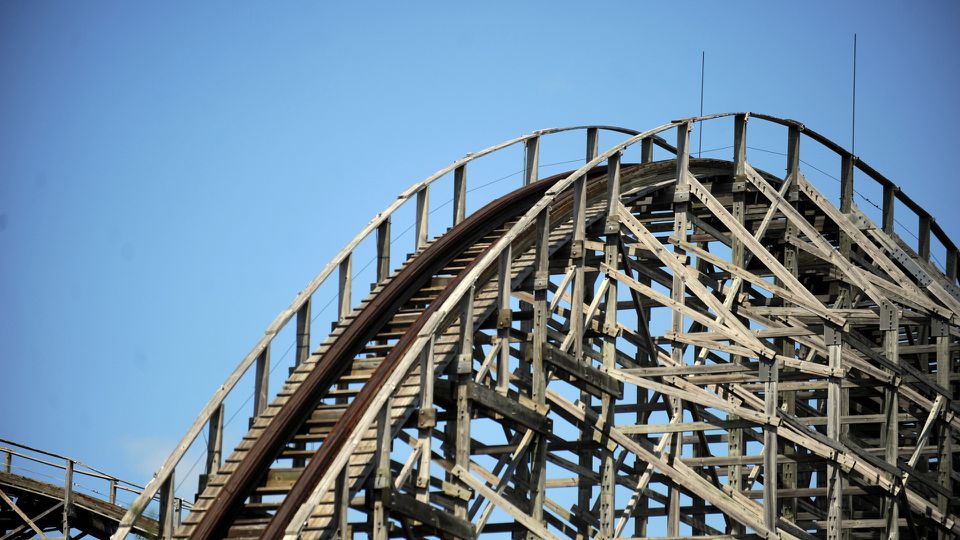
You were thrown hard against a lap bar on a roller coaster, hurt when a carnival ride jerked to a stop, or injured on a water slide. Maybe it was your child. If you’re hurting and still trying to understand how a ride built for fun did this, that’s a normal reaction.
Here’s the plain answer. The park or event host, the company that ran the ride, the ride’s maker or a contractor that maintained it can be responsible when careless operation or upkeep, or a defective ride, caused the injury. The federal product safety agency has no authority over rides permanently fixed at a park; in Michigan, the state permits every ride and generally inspects it at least once a year. A waiver may not end your claim, and in Michigan a parent’s advance waiver generally doesn’t bind a child. Michigan’s rules are in the boxes marked “In Michigan.”
The hard part is usually proof. The inspection logs, maintenance records and video are in the operator’s hands, and its insurer handles claims like yours every day.
Hurt on a ride and not sure where you stand? Get a free case review. Four quick questions, no cost, no obligation.
What should you do right after a ride injury?
A traveling ride can be gone within days, so act before you leave:
- Get medical care, even if you feel all right; some injuries show symptoms later. Tell every provider how you were hurt.
- Report the injury before you leave, to the ride supervisor or first aid station, and get the incident-report number. Note the ride’s name and who runs it.
- Take photos and video of the ride, your seat and restraint, the posted rules and your injuries, and get witnesses’ names and phone numbers.
- Keep your ticket, wristband, receipts and any waiver you signed, and save the ticket terms.
- Ask in writing for the evidence to be kept: video, inspection, maintenance and training records, and the incident report; see how to preserve evidence. In Michigan, if a party fails to produce important evidence it controlled, without a reasonable excuse, jurors may be told they can infer it would have hurt that party (M Civ JI 6.01).
- Report it to the state agency that inspects rides, where there is one.
Who can be responsible for a ride injury?
Often more than one company:
- The park or event host. Whoever controls the grounds owes paying visitors reasonable care and can’t hand that duty off (in Michigan, M Civ JI 19.01, 19.03, 19.10). In 1989, Michigan’s Court of Appeals held that a church whose fundraiser featured a carnival company’s rides owed a duty of reasonable care to a child hurt on one of them, though it didn’t own or run the ride (Kendzorek v Guardian Angel Catholic Parish).
- The ride’s owner and operator, including a traveling carnival, for careless operation, inspection or upkeep. In 1968, the Court of Appeals upheld a verdict for a rider thrown when a spinning ride’s cables snapped: worn, cracked and rusted parts let the jury infer that the owner hadn’t properly inspected, maintained and replaced its equipment (Martin v King Riding Device Co).
- The manufacturer, if a design or manufacturing flaw, or missing warnings or instructions, caused the injury: a product liability claim in Michigan (MCL 600.2945(h), (i)); see how product liability claims work.
- A maintenance or inspection contractor, for its own carelessness. Its contract with the park doesn’t erase its separate duty to use care toward people its work could hurt (in Michigan, Loweke v Ann Arbor Ceiling & Partition Co, 2011).
Kendzorek and Martin are older rulings: Court of Appeals panels don’t have to follow that court’s decisions issued before November 1, 1990 (MCR 7.215(J)(1)).
Not sure who ran the ride or who maintained it? Get a free case review. Four quick questions, no cost, no obligation.
Who inspects amusement rides, and how common are injuries?
The federal Consumer Product Safety Commission (CPSC) covers rides that move from place to place, such as those at fairs and carnivals, but federal law excludes rides “permanently fixed to a site” from its authority (15 U.S.C. § 2052(a)(5); CPSC, 2005). Oversight of fixed rides depends on the state: in May 2015, CPSC staff counted eight states and the District of Columbia with no state-run inspection program for fixed-site rides (CPSC, 2015).
Emergency departments treated an estimated 43,826 injuries associated with amusement attractions, including rides, in 2024, a category that covers fixed and traveling rides, inflatables such as “moon bounces,” rides at malls and restaurants, and waterslides. Children under 15 accounted for more than 6 in 10 of them (CPSC, NEISS Data Highlights 2024).
What did the park or ride operator owe you?
States differ. Some treat ride operators like common carriers, such as buses and trains, and hold them to a heightened duty of care. In 2005, California’s Supreme Court held, 4–3, that the operator of a roller coaster or similar ride “can be a carrier of persons for reward,” which California law requires to use “the utmost care and diligence” for passengers’ safety, in a case over a woman’s death blamed on a theme park ride. It noted that courts in some other states have held that ride operators aren’t common carriers (Gomez v. Superior Court).
Does a waiver or your ticket’s fine print end your claim?
Not always. Parks and carnivals may ask you to sign a release, a promise not to sue, and tickets and websites may carry terms of their own. Whether they hold depends on the state, the wording and who signed.
Other states differ: some enforce parental waivers, some by statute (as described in Woodman). Ticket terms may also say where you have to sue; see fine print and forum clauses when you’re hurt away from home.
What if your child was hurt?
Children’s claims carry extra protections and extra rules for settlements and deadlines; see how a child’s injury claim and settlement work.
What can compensation cover?
In Michigan, damages can include the reasonable cost of necessary medical care, past and future; lost earning capacity; and harm with no receipt, such as physical pain, mental anguish, fright and shock, and the loss of social pleasures and enjoyments (M Civ JI 50.02, 50.05, 50.06). Your share of fault reduces them, and if it’s more than everyone else’s combined, you get no noneconomic damages, such as pain and suffering (MCL 600.2959). In a product liability claim, such as one against a ride’s maker, Michigan caps noneconomic damages, with exceptions (MCL 600.2946a); see what a product liability claim can be worth.
How long do you have to file?
Every state sets its own deadlines, and claims against a government can have much shorter notice deadlines; see injury deadlines in every state. If you were hurt in another state, a Michigan lawsuit must beat both states’ deadlines, unless the claim accrued to a Michigan resident; then Michigan’s applies (MCL 600.5861). See claims over injuries far from home.
What to do next
- Get care and keep every record.
- Report the injury before you leave, and save the evidence: the report number, photos, witnesses’ names, your ticket and wristband.
- Ask in writing for the video and the ride’s records to be kept, and report the incident to the state (in Michigan, LARA).
- Be careful what you say and sign. You don’t have to give the other side’s insurer a recorded statement, and it’s safer not to before you’ve had advice; see talking to an insurance adjuster. Don’t sign a release before you know how badly you’re hurt.
- Talk to a lawyer before the first deadline. Get a free case review, or compare Michigan injury lawyers.
What waiting can cost
- The ride and its records. A traveling ride moves on, and Michigan requires daily inspection records to be kept at the site only until the state’s next inspection (R 408.874).
- A claim against a public owner. In Michigan, notice of a dangerous public building is due within 120 days (MCL 691.1406).
- The right to sue. Most Michigan claims must be filed within 3 years (MCL 600.5805(2)).
What a good outcome looks like
Whoever was responsible answers for it: the park, the ride’s operator, its maker or a contractor. Those responsible pay for medical care, including care a child will need later, and for lost earnings and pain; any share of fault assigned to you matches what happened; and a child’s settlement is protected. From wondering whether a ride injury was just bad luck to knowing who ran the ride, which rules it had to follow and which deadlines apply.
For more guides, browse slip, fall and unsafe property claims and defective product claims.
Frequently asked questions
Can you sue an amusement park for a ride injury?
Yes, if the park, the ride's operator, its maker or a contractor failed to use reasonable care, or sold a defective ride, and that caused your injury. You have to prove it; a ride injury isn't automatically anyone's fault. In Michigan, paying customers are invitees, owed reasonable care about dangers the park knew about or should have known about (M Civ JI 19.01, 19.03), and a host whose event features a carnival company's rides can still owe visitors a duty of reasonable care (Kendzorek v Guardian Angel Catholic Parish, 1989).
Who inspects amusement rides, and how do I report a ride injury in Michigan?
The federal Consumer Product Safety Commission's authority covers rides that move from place to place, not rides permanently fixed at a park (15 U.S.C. § 2052(a)(5)). In Michigan, the Department of Licensing and Regulatory Affairs (LARA) permits rides at parks and traveling shows and generally inspects each one at least once a year (MCL 408.660(1)). Report the injury at the ride before you leave. To report an incident on a ride that needs a state permit, LARA's Ski-Amusement Section says to email its incident report form to LARA-BCC-SKI-AMUSEMENT@michigan.gov. The owner or operator must also phone LARA immediately about an accident that kills or seriously injures someone because of a structural or mechanical failure, or in which the ride's construction, design or function may have directly contributed (MCL 408.670).
I signed a waiver. Can I still sue?
Possibly. In Michigan, a release of claims for ordinary negligence can be enforced if it was 'fairly and knowingly made' (Paterek v 6600 Ltd, 1990) and clearly gives up claims for the business's own negligence (Xu v Gay, 2003). It isn't fairly made if the signer was dazed, in shock or under the influence of drugs, its nature was misrepresented, or there was other fraud or overreaching (Xu). No release can shield a business from liability for gross negligence or willful and wanton misconduct (Lamp v Reynolds, 2002). Other states have their own rules, so where the park is matters.
Can a parent's waiver stop a child's ride injury claim in Michigan?
Generally not. In 2010, the Michigan Supreme Court held that under Michigan's common law, a preinjury liability waiver signed by a parent on a child's behalf is unenforceable (Woodman v Kera LLC). A 2011 statute allows a parent's written release for a child's recreational activity sponsored or organized by a nongovernmental, nonprofit organization, but it covers only injuries that result solely from the activity's inherent risks, not the negligence of the released party or its employees or agents (MCL 700.5109).
Are amusement rides held to a higher standard, like buses and trains?
In some states. In 2005, California's Supreme Court held that the operator of a roller coaster or similar ride can be a 'carrier of persons for reward,' which California law requires to use 'the utmost care and diligence' for its passengers' safety; courts in some other states have held that ride operators aren't common carriers (Gomez v. Superior Court). Michigan doesn't use a higher standard even for buses and trains: a carrier owes 'the common-law duty of due care' (Frederick v City of Detroit, 1963). So in Michigan, plan on the ordinary duty of reasonable care, including the duty a park owes its paying customers as invitees (M Civ JI 10.02, 19.03).
How long do I have to file an amusement park injury claim in Michigan?
Generally 3 years from the injury, including a product liability claim against the ride's maker (MCL 600.5805(2), (12)). A child can sue until a year after turning 18 if that's later (MCL 600.5851(1)), but parents should plan on 3 years for their own claim for the child's medical bills (Walter v City of Flint, 1972). A claim over a dangerous public building run by a city, county, school or the State needs written notice within 120 days (MCL 691.1406). If you were hurt in another state, a Michigan lawsuit must beat both states' deadlines, unless the claim accrued to a Michigan resident; then Michigan's applies (MCL 600.5861).
Sources
- Carnival-amusement safety act of 1966, 1966 PA 225 (MCL 408.651 to 408.670) · Michigan Legislature
- MCL 408.652, Carnival-amusement safety act: definitions (the department is LARA) · Michigan Legislature
- MCL 408.657, Director to administer and enforce the act · Michigan Legislature
- MCL 408.660, Permit required; annual inspection; operator age and training · Michigan Legislature
- MCL 408.666, Insurance or bond against liability for injuries to riders · Michigan Legislature
- MCL 408.667, Permit suspension; civil fines; misdemeanor; riders exempt from the penalty · Michigan Legislature
- MCL 408.668, Required conduct of riders · Michigan Legislature
- MCL 408.669, Rider safety signs; injury-reporting locations · Michigan Legislature
- MCL 408.670, Accident reports; removal from service; inspection · Michigan Legislature
- Carnival and Amusement Safety General Rules, Mich Admin Code R 408.801 et seq. (effective March 20, 2024): R 408.802, 408.803, 408.814, 408.832, 408.874 and 408.898 · Michigan Department of Licensing and Regulatory Affairs
- Ski-Amusement Section (Carnival-Amusement Safety Program), Bureau of Construction Codes · Michigan Department of Licensing and Regulatory Affairs
- Amusement or Ski Incident report form (BCC-3305, June 2024) · Michigan Department of Licensing and Regulatory Affairs
- Safety Tips for Visiting Carnivals and Amusement Parks (news release, June 14, 2024) · Michigan Department of Licensing and Regulatory Affairs
- 15 U.S.C. § 2052(a)(5), Consumer Product Safety Act: definition of consumer product (amusement rides) · Office of the Law Revision Counsel, U.S. House of Representatives
- Amusement Ride-Related Injuries and Deaths in the United States: 2005 Update (Mark S. Levenson, September 7, 2005) · U.S. Consumer Product Safety Commission
- NEISS Data Highlights, Calendar Year 2024 · U.S. Consumer Product Safety Commission
- Directory of State Amusement Ride Safety Officials (May 2015) · U.S. Consumer Product Safety Commission
- Gomez v. Superior Court, 35 Cal. 4th 1125 (2005) · Supreme Court of California, via the Caselaw Access Project (Harvard Law School)
- Kendzorek v Guardian Angel Catholic Parish, 178 Mich App 562 (1989) · Michigan Court of Appeals, via the Caselaw Access Project (Harvard Law School)
- Martin v King Riding Device Co, 14 Mich App 480 (1968) · Michigan Court of Appeals, via the Caselaw Access Project (Harvard Law School)
- Frederick v City of Detroit, 370 Mich 425 (1963) · Michigan Supreme Court, via the Caselaw Access Project (Harvard Law School)
- Loweke v Ann Arbor Ceiling & Partition Co, LLC, 489 Mich 157 (2011) · Michigan Supreme Court, via the Caselaw Access Project (Harvard Law School)
- Stitt v Holland Abundant Life Fellowship, 462 Mich 591 (2000) · Michigan Supreme Court, via the Caselaw Access Project (Harvard Law School)
- Kandil-Elsayed v F & E Oil, Inc; Pinsky v Kroger Co of Mich, 512 Mich 95 (decided July 28, 2023) · Michigan Supreme Court
- Woodman v Kera LLC, 486 Mich 228 (2010) · Michigan Supreme Court, via the Caselaw Access Project (Harvard Law School)
- Paterek v 6600 Ltd, 186 Mich App 445 (1990) · Michigan Court of Appeals, via the Caselaw Access Project (Harvard Law School)
- Lamp v Reynolds, 249 Mich App 591 (2002) · Michigan Court of Appeals, via the Caselaw Access Project (Harvard Law School)
- Xu v Gay, 257 Mich App 263 (2003) · Michigan Court of Appeals, via the Caselaw Access Project (Harvard Law School)
- Felgner v Anderson, 375 Mich 23 (1965) · Michigan Supreme Court, via the Caselaw Access Project (Harvard Law School)
- Gumienny v Hess, 285 Mich 411 (1938) · Michigan Supreme Court, via the Caselaw Access Project (Harvard Law School)
- Walter v City of Flint, 40 Mich App 613 (1972) · Michigan Court of Appeals, via the Caselaw Access Project (Harvard Law School)
- Michigan Model Civil Jury Instructions (updated July 21, 2026): M Civ JI 6.01, 10.02 (and comment), 10.07, 12.01, 12.05, 13.06 (comment), 13.08, 19.01, 19.03, 19.10, 50.02, 50.05, 50.06 and 50.07 (comment) · Michigan Supreme Court, Committee on Model Civil Jury Instructions
- Michigan Court Rules (updated September 2, 2026): MCR 2.420 and 7.215(J)(1) · Michigan Supreme Court
- MCL 700.5109, Release from liability for injury of a minor during recreational activity · Michigan Legislature
- MCL 600.2945, Product liability definitions · Michigan Legislature
- MCL 600.2946a, Product liability; limitation on noneconomic damages · Michigan Legislature
- MCL 600.2959, Comparative fault; reduced damages · Michigan Legislature
- MCL 600.5805, Injuries to persons or property; periods of limitations · Michigan Legislature
- MCL 600.5851, Claims by minors; year of grace · Michigan Legislature
- MCL 600.5861, Causes of action accruing outside Michigan; period of limitations · Michigan Legislature
- MCL 691.1406, Public buildings; dangerous condition; notice · Michigan Legislature
- MCL 691.1407, Governmental immunity from tort liability · Michigan Legislature
- MCL 333.12521, Public swimming pools: definitions · Michigan Legislature
Updated September 29, 2026
This guide is general information, not legal advice, and laws change. For advice about your situation, talk to a lawyer licensed in your state. Reading this page or contacting us does not create an attorney-client relationship.